.svg?sfvrsn=a2a08b41_2 "Masdar-City-Free-Zone-Header-Resized")
Ultimate Beneficial Owner (UBO) in Abu Dhabi: What Businesses Need to Know

Starting a business in Abu Dhabi involves more than licensing and operational planning. Businesses are also expected to meet transparency and compliance obligations that support responsible corporate governance across the UAE.
One of the most important requirements companies should understand early is Ultimate Beneficial Owner (UBO) disclosure.
UBO compliance helps authorities identify who ultimately owns or controls a business. These regulations support anti-money laundering (AML) efforts, improve business transparency, and strengthen investor confidence within Abu Dhabi’s business environment.
For many entrepreneurs and international investors, the terminology can sound more complicated than it actually is. The good news is that once the fundamentals are understood, managing UBO responsibilities becomes much more straightforward.
At Masdar City Free Zone, businesses operate within an organized and compliance-focused environment designed to support transparent and efficient company formation in Abu Dhabi.
This guide explains what an Ultimate Beneficial Owner is, why UBO disclosure matters, how UAE UBO regulations work, which businesses may need to comply, and how businesses can approach compliance responsibilities confidently
What Is an Ultimate Beneficial Owner (UBO)?
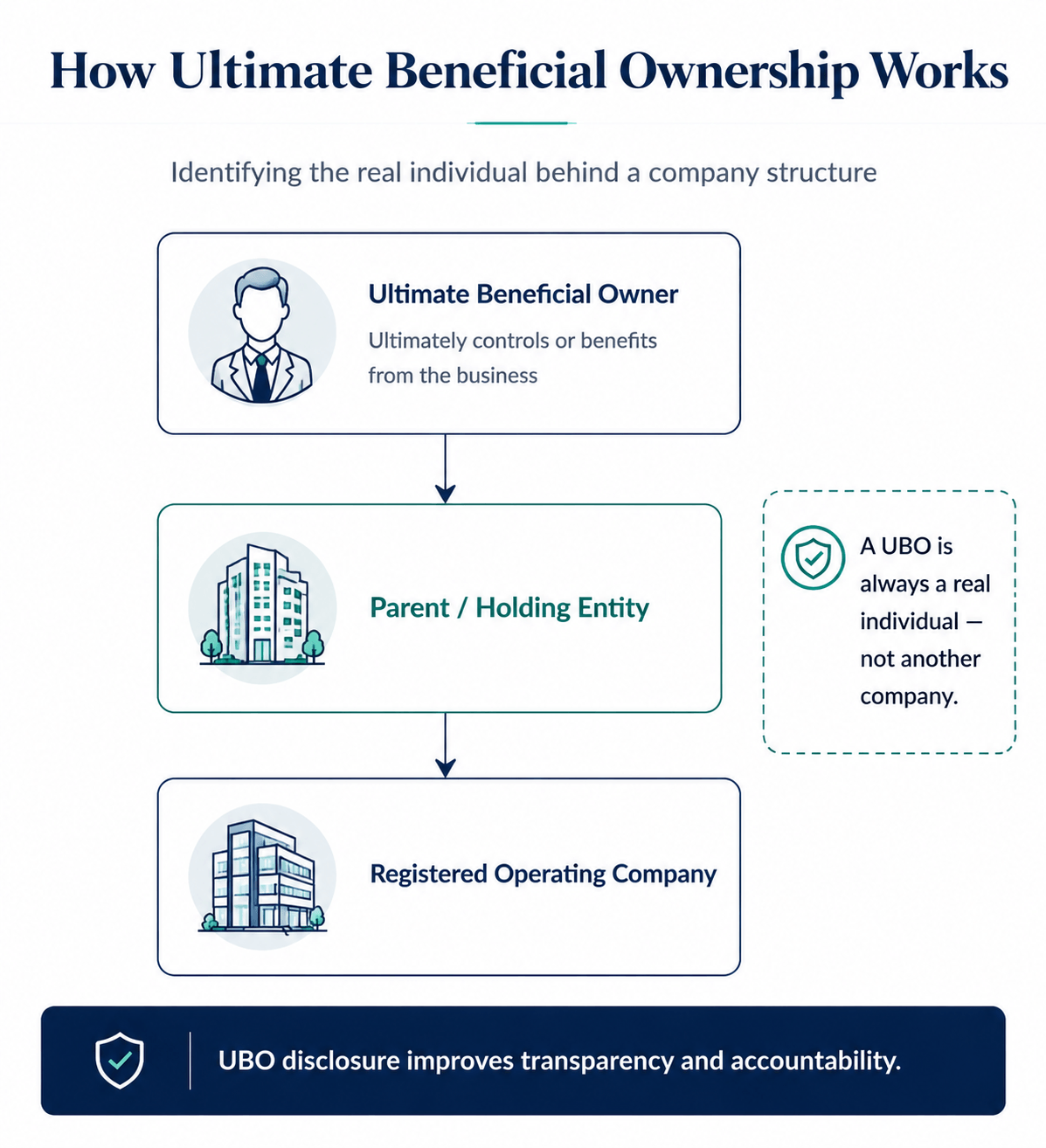
An Ultimate Beneficial Owner, commonly called a UBO, is the individual who ultimately owns, controls, or benefits from a company, even if ownership passes through multiple entities or shareholders.
In simple terms, authorities want to identify the real person behind a business structure.
A UBO is always a real individual, and not another company or corporate entity.
For example, a business may be owned by a holding company, which in turn is owned by another entity, yet control and financial benefit may ultimately trace back to a single individual. That individual would be considered the Ultimate Beneficial Owner.
Understanding Beneficial Ownership
Beneficial ownership refers to the person who ultimately benefits from the company’s ownership or control, regardless of how the structure appears on paper.
This differs from a standard shareholder relationship because:
Shareholders may hold shares on behalf of others
Ownership structures can involve multiple entities
Operational control may sit elsewhere within the structure
UBO disclosure rules are designed to improve visibility around these arrangements.
What AML Means
AML stands for Anti-Money Laundering. AML regulations help governments reduce financial crime risks by improving transparency across financial and business activities.
UBO disclosure forms part of broader AML compliance efforts within the UAE and internationally.
Why UBO Compliance Matters
UBO compliance supports transparency, accountability, and trust within the business environment.
When authorities can identify who ultimately owns or controls businesses, it becomes easier to reduce financial crime risks, strengthen corporate governance, improve regulatory oversight, and maintain investor confidence
This matters particularly in international business hubs such as Abu Dhabi, where businesses, investors, and financial institutions operate across multiple jurisdictions.
UBO compliance also supports:
Stronger AML efforts
Improved business transparency
More reliable ownership records
Greater confidence for banks, investors, and commercial partners
For legitimate businesses, transparency requirements are not simply regulatory obligations. They also help create a more stable and trusted commercial environment.
A startup seeking investment, for example, may find that investors and financial institutions increasingly expect clear ownership structures and organized compliance documentation before moving forward with partnerships or funding discussions.
UAE UBO Regulations Explained
Legal persons subject to UAE beneficial owner procedures are expected to maintain accurate beneficial ownership information and provide disclosures where required under applicable regulations.
The UAE introduced UBO regulations as part of broader efforts to strengthen transparency, corporate governance, and AML compliance across the business sector.
Why the UAE Introduced UBO Regulations
International business environments increasingly prioritize ownership transparency. The UAE’s UBO framework supports this by helping authorities maintain accurate visibility over business ownership structures operating within the country.
The framework also supports financial transparency, stronger compliance standards, investor confidence, and responsible governance
According to the Cabinet Decision No. 109 of 2023 Regulating the Beneficial Owner Procedures, businesses operating within the UAE are expected to maintain beneficial ownership information as part of broader transparency and AML compliance measures.
What Businesses Are Typically Required to Maintain
Depending on the business structure and applicable regulations, companies may need to maintain:
Shareholder registers
UBO registers
Ownership records
Supporting identification documentation
The exact requirements can vary depending on company structure, licensing authority, ownership arrangements, and applicable exemptions
The Importance of Accurate and Updated Records
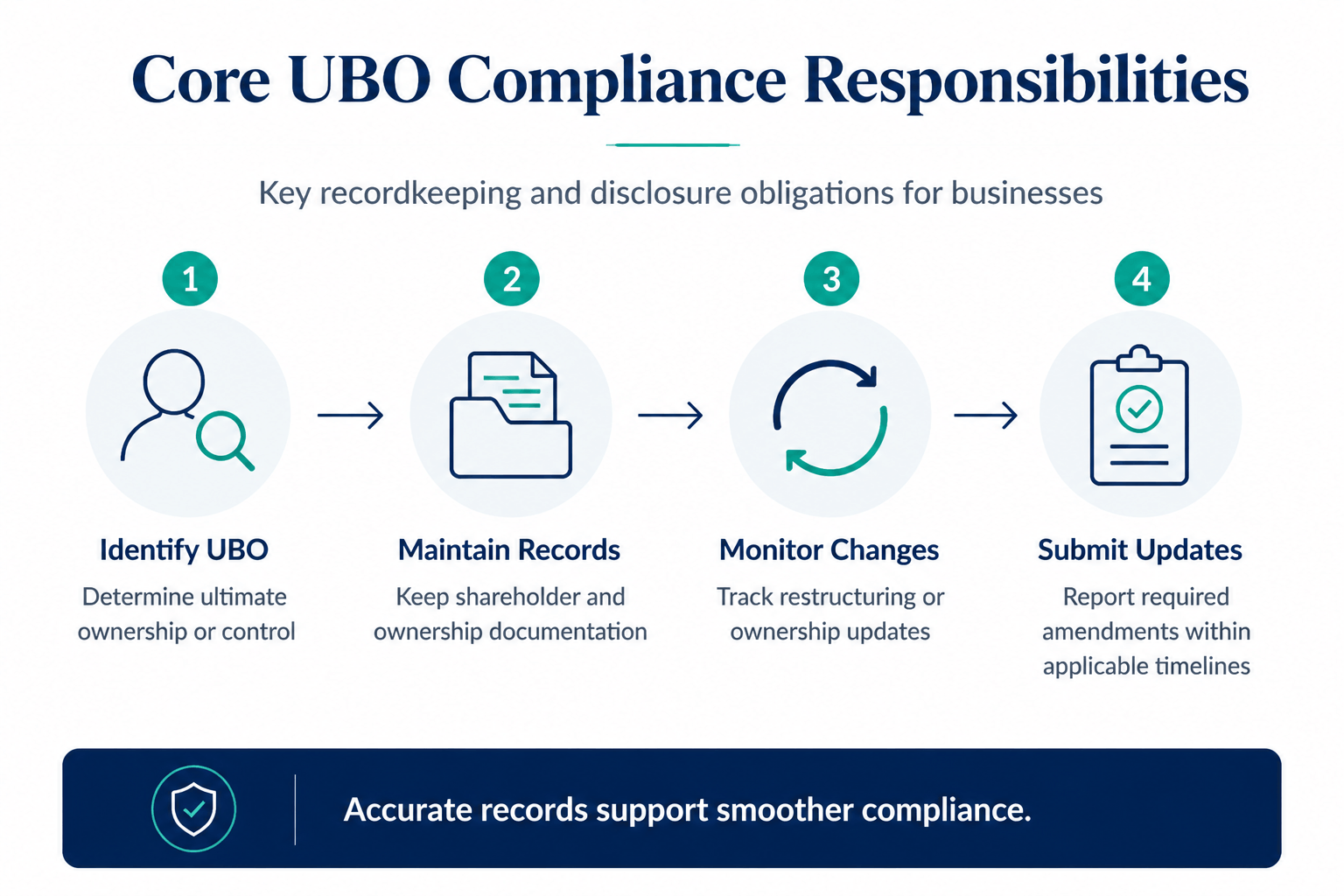
UBO compliance is not only about submitting information once during setup. Businesses are generally responsible for maintaining accurate and updated records over time.
If ownership or control changes, records may need to be updated accordingly.
In many cases, changes to beneficial ownership information must be reported within a defined timeframe. Under UAE beneficial owner procedures, amendments or changes to required data are generally submitted to the Registrar within 15 days from the date of the change.
This is one reason businesses benefit from organized documentation processes from the beginning.
Businesses seeking additional business compliance and regulatory guidance should ensure they stay informed about ongoing obligations relevant to their company structure.
Which Businesses Must Comply?
Many businesses operating in the UAE, including companies established within free zones, may have obligations related to UBO disclosure and recordkeeping.
This can include:
Startups
SMEs
Consultancy firms
Holding companies
Foreign-owned businesses
Free zone entities
Investment structures
The specific obligations can vary depending on the business structure and regulatory category.
Some entities may qualify for exemptions under applicable regulations, while others may face additional reporting requirements based on ownership complexity or operational activities.
For this reason, businesses should always confirm their specific obligations directly through the relevant authority rather than assuming all requirements apply equally to every company.
UBO Responsibilities for Businesses
UBO compliance becomes much easier to manage when businesses maintain organized records and clear ownership visibility from the start.
Maintaining Accurate Records
Businesses should maintain organized documentation related to:
Full name, nationality, and date/place of birth
Place of residence or address for notifications
Travel document or identity card number, with issuance and expiry dates
Date the individual became a Beneficial Owner
Date the individual ceased to be a Beneficial Owner, if applicable
Clear documentation helps reduce confusion and supports smoother compliance processes.
Identifying the Correct UBO
In some ownership structures, identifying the Ultimate Beneficial Owner may be straightforward. In others, layered ownership arrangements may require additional review.
The key objective is identifying the individual who ultimately owns, controls, or benefits from the company.
Updating Ownership Information
Ownership structures can change over time through new investors, restructuring, share transfers or operational changes
Businesses are generally expected to keep ownership records updated where required under applicable regulations.
Working Within Structured Compliance Processes
Businesses operating within organized free zone environments often benefit from clearer compliance frameworks and more streamlined registration procedures.
Understanding company licensing and registration requirements early can help businesses establish stronger compliance practices from the beginning.
Potential Consequences of Non-Compliance
Failure to maintain accurate UBO records or provide required disclosures can create operational and regulatory complications for businesses.
The consequences depend on the specific circumstances and applicable regulations, but non-compliance may contribute to:
Administrative penalties
Licensing delays
Additional compliance reviews
Reputational concerns
Increased regulatory scrutiny
For businesses working with financial institutions, investors, or international partners, incomplete ownership documentation can also slow down onboarding and verification processes.
The goal of UBO compliance is not to create unnecessary barriers for businesses, but to support transparency and accountability within the wider business environment.
How Masdar City Free Zone Supports Compliance
Managing compliance obligations becomes significantly easier when businesses operate within a structured and transparent business environment.
Masdar City Free Zone supports businesses through organized setup processes designed to help companies navigate registration and operational requirements more efficiently.
Streamlined Business Setup Processes
Structured registration environments can help reduce confusion around documentation requirements and administrative procedures.
Businesses accessing business setup support services can often manage operational and compliance processes more efficiently from the beginning.
Transparent Regulatory Environment
Transparency plays an important role in maintaining investor confidence and supporting responsible business operations.
Masdar City Free Zone operates within Abu Dhabi’s broader regulatory environment, which prioritizes:
Business transparency
Compliance support
Responsible governance
Internationally aligned operational standards
Operating Within Abu Dhabi’s Innovation Ecosystem
Businesses operating within Abu Dhabi’s sustainability-focused business environment also benefit from proximity to innovation-driven industries connected to technology, sustainability, AI, mobility, and advanced research
That ecosystem continues to strengthen Abu Dhabi’s reputation as an internationally connected business hub.
Supporting Businesses Through Growth
Startups, SMEs, and international investors often face multiple operational requirements during company formation. Clear guidance and organized compliance expectations help reduce unnecessary complexity during that process.
For many businesses, proactive compliance management becomes easier when transparency and operational structure are prioritized from the beginning.
Building Stronger Compliance Foundations
UBO compliance is ultimately about transparency, accountability, and maintaining trust within the business environment. While the terminology may initially sound technical, the underlying objective is straightforward: ensuring businesses maintain accurate ownership visibility and responsible governance practices.
For startups, international investors, SMEs, and growing businesses in Abu Dhabi, understanding these responsibilities early can help prevent unnecessary operational complications later.
If you’re setting up a company in Abu Dhabi and want clarity around registration, documentation, or compliance steps, speak with our team before you move forward.
Frequently Asked Questions
What is an Ultimate Beneficial Owner (UBO) in the UAE?
An Ultimate Beneficial Owner (UBO) is the individual who ultimately owns, controls, or benefits from a company, even if ownership passes through multiple entities or shareholders.
Which businesses must comply with UBO regulations in Masdar City Free Zone?
In accordance with Cabinet Decision No. (109) of 2023, all registered businesses in Masdar City Free Zone are required to declare and maintain a record of their Beneficial Owners. However, certain entities are exempt from these requirements, including companies wholly owned by the Federal or Local Government (or companies wholly owned by such companies), Financial Free Zones, and Governmental partners.
What information is required for UBO disclosure?
Full name, nationality, and date/place of birth
Place of residence or address for notifications
Travel document or identity card number, with issuance and expiry dates
Date the individual became a Beneficial Owner
Date the individual ceased to be a Beneficial Owner, if applicable
As per Cabinet Decision No. (109) of 2023, the Beneficial Owner's Record must include the following details:
What happens if a company does not comply with UBO regulations?
Non-compliance may contribute to administrative penalties, licensing delays, increased scrutiny, or operational complications depending on the circumstances and applicable regulations.
How does Masdar City Free Zone support business compliance?
Masdar City Free Zone supports businesses through organized setup processes, structured compliance environments, and operational support designed to help companies manage registration and documentation responsibilities more effectively.