.svg?sfvrsn=a2a08b41_2 "Masdar-City-Free-Zone-Header-Resized")
Inside Abu Dhabi’s Free-Zone Incubators: How Startups Scale at Masdar City

Every startup reaches a moment where progress slows. The idea is solid, early feedback looks promising, but growth feels harder than expected. Questions pile up around structure, regulation, funding readiness, and what “scaling” actually looks like in practice.
For many founders in Abu Dhabi, that moment is where free-zone incubators step in. Not as a shortcut, but as a structured environment that helps young companies move from potential to progress.
How Free-Zone Incubators Support Early-Stage Startups
Incubators exist to solve a specific problem. Early-stage companies often have momentum, but not yet the systems, confidence, or network to grow sustainably.
Within a free-zone setting, incubators provide:
A structured environment during the most fragile phase of a startup’s journey
Access to guidance without the pressure of immediate scale
Time and space to validate ideas while staying compliant
Rather than pushing rapid expansion, incubation focuses on building strong foundations that can support growth later.
Beyond Desks and Wi-Fi: What Incubators Really Provide
Physical space is only the visible layer. What founders value most is the support that sits behind it.
A well-run business incubator typically offers:
Access to mentors with real operational experience
Guidance on regulatory and licensing requirements
Introductions to partners, pilot opportunities, or industry stakeholders
Structured programmes that help founders test, refine, and adapt their business model
This support helps startups avoid common early mistakes and focus energy where it matters most.
Why Abu Dhabi Is a Natural Home for Incubated Startups
Abu Dhabi’s startup environment has grown around long-term thinking rather than short-term hype. That makes it particularly suited to incubation models.
Founders benefit from:
A stable regulatory framework that supports experimentation within clear boundaries
Government-backed initiatives that encourage innovation and research
A strong focus on sectors such as clean technology, advanced manufacturing, AI, and life sciences
For startups building complex or regulated products, this environment reduces uncertainty during early growth.
Who Benefits Most from an Incubator Environment
Incubation is not for every business. It works best for founders who are still shaping how their company will operate and scale.
Startups that often gain the most value include:
First-time founders navigating structure and governance for the first time
Research-driven or IP-led ventures moving toward commercialisation
Teams building technical or regulated products that require careful validation
In these cases, guidance and accountability can be just as important as funding.
From Incubation to Scale: How Growth Takes Shape
Scaling rarely happens overnight. Incubation helps startups move through growth in stages rather than leaps.
This usually involves:
Shifting from idea validation to consistent commercial traction
Strengthening internal processes and decision-making
Preparing the business for partnerships, investment, or wider market entry
The goal is not rapid expansion at all costs, but steady growth that can be sustained once the incubator phase ends.
Masdar City as a Scaling Environment
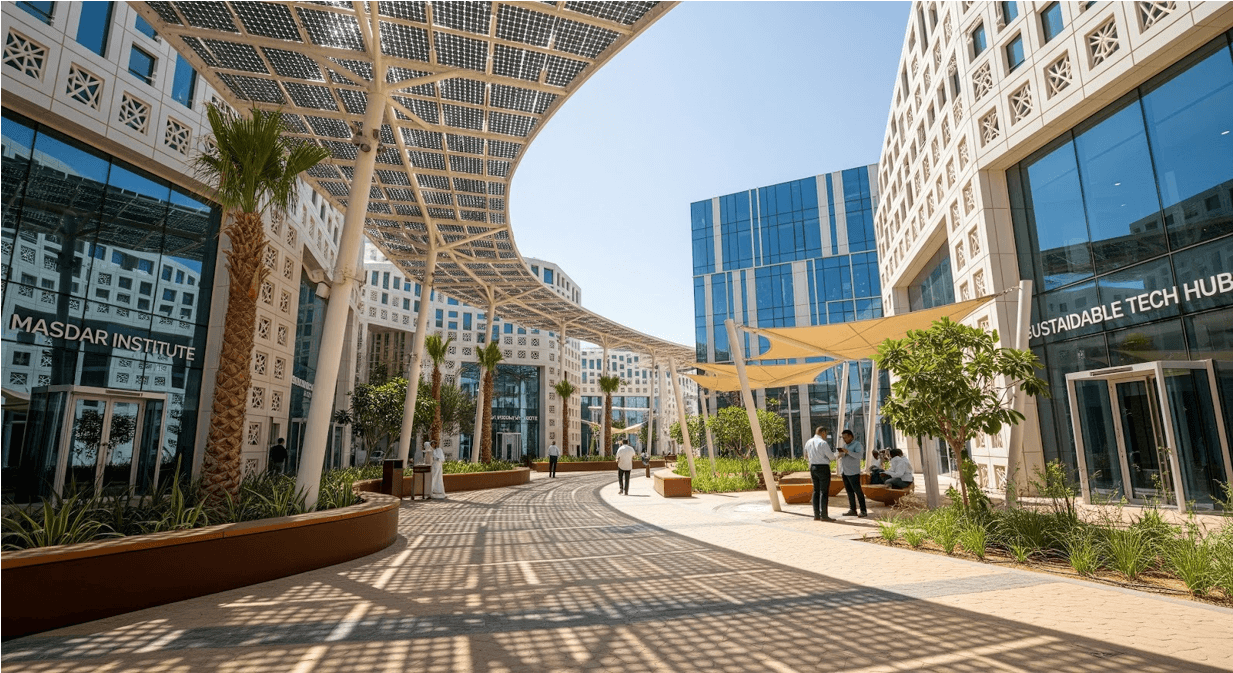
Within Masdar City Free Zone, incubation connects naturally with a wider innovation-led environment. Startups operating here are surrounded by research institutions, established enterprises, and sector-specific clusters that support long-term development.
This proximity helps young companies test ideas, collaborate, and transition from incubation into broader commercial activity without changing ecosystems.
What Founders Should Consider Before Joining an Incubator
Before committing to an incubator programme, founders should pause and assess readiness.
Key questions include:
Are you open to structure, feedback, and accountability?
Do you have the capacity to engage fully with mentoring and programmes?
Is your goal long-term growth rather than a quick launch?
Incubation works best when founders see it as a partnership rather than a service.
Exploring the Right Support for Your Startup
Choosing the right environment can shape how your business grows over the next few years. If you want to understand how incubation, mentorship, and structured support fit into a wider growth plan, the Business Enabler framework provides useful context on available pathways.
If you’re considering your next step and want clarity on what support makes sense for your stage, you can reach out to us for a conversation focused on your goals and challenges.